

 Español
 Français
Your cart
There are no more items in your cart
Ozempic and GLP-1: the nutrition guide for when your appetite disappears
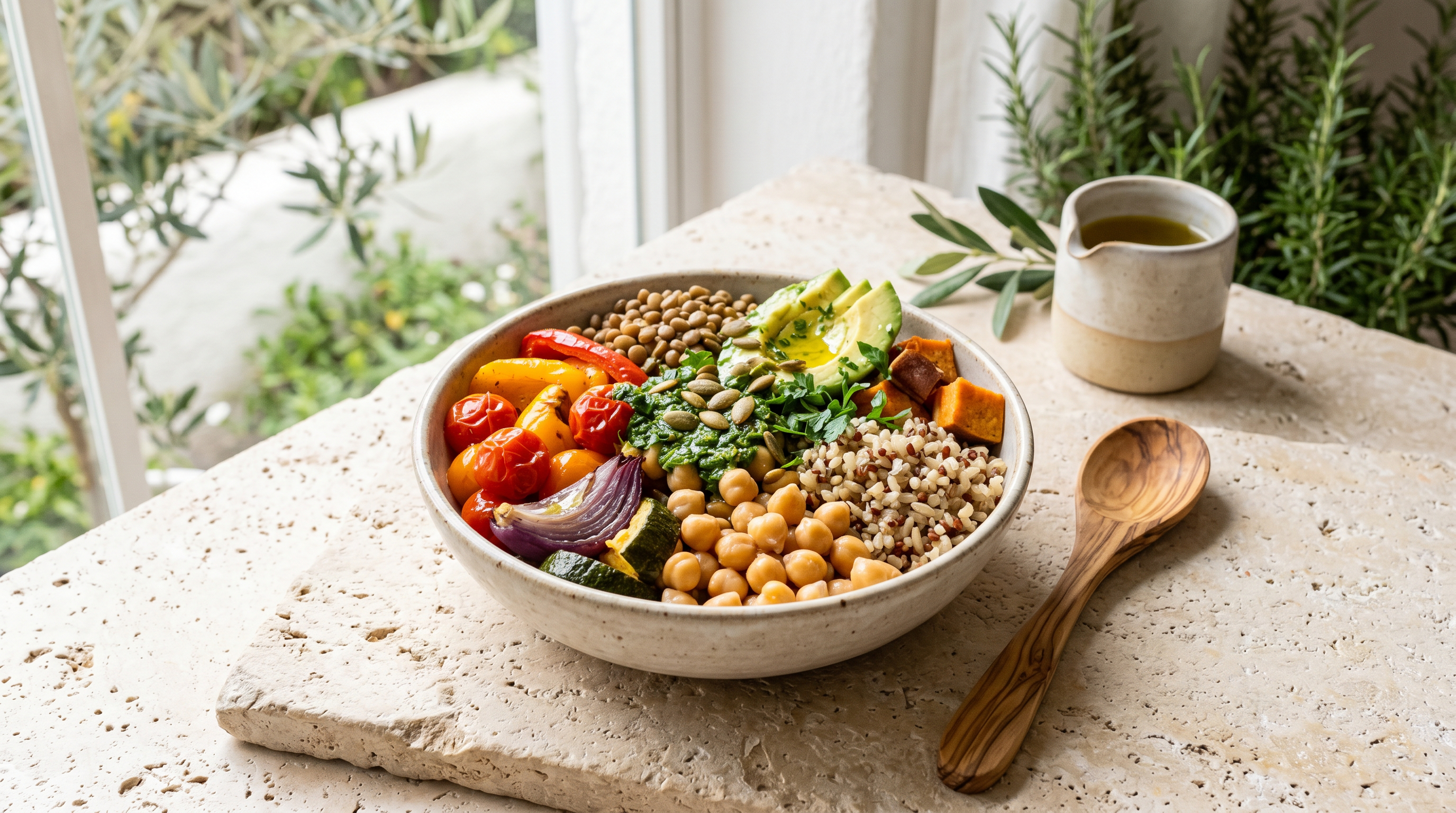
When your appetite drops to almost nothing, the temptation is to eat whatever fits and move on. But if you are taking Ozempic, Mounjaro, or another GLP-1 medication, what you eat matters more than ever, precisely because you are eating so much less. Knowing what to eat on Ozempic or any GLP-1 agonist is not about following a weight-loss diet: it is about protecting your muscle, your energy, and your long-term health.
Why GLP-1 drugs change your relationship with food
GLP-1 receptor agonists (semaglutide, tirzepatide, and others) act on the hypothalamus to reduce hunger signals and extend feelings of fullness. In practice, many people go from eating three full meals a day to a few spoonfuls per sitting, or skip meals entirely without noticing.
This shift in food volume creates a nutritional paradox: your body still needs the same essential nutrients, the same amount of protein, and the same fibre as before. But now it must get them from a fraction of the total food eaten. If that reduced food is not nutritionally dense, deficiencies appear, silently, and compound over time into real consequences for muscle, energy, and immunity.
The European Food Safety Authority (EFSA) sets daily reference intakes for more than 30 nutrients in healthy adults. Those values do not decrease because you are taking a drug that suppresses your appetite.
GLP-1 medications also slow gastric emptying, meaning food moves from the stomach to the intestine more slowly than usual. This extends satiety, but it also means large volumes of food are harder to tolerate. Small, nutrient-dense portions are both better tolerated and more efficiently absorbed.
The silent risk nobody talks about: losing muscle
Weight loss on GLP-1 medications can be rapid, particularly in the first months of treatment. But not all of that loss is fat. The STEP clinical trials with semaglutide found that, without an active focus on protein intake and resistance exercise, approximately 39% of total weight lost was lean mass (muscle, bone density, and intracellular water), not fat tissue (Wilding et al., NEJM, 2021). Later studies with tirzepatide show similar proportions.
Losing muscle has direct consequences: a lower resting metabolic rate (which makes regain more likely when treatment stops), reduced physical capacity, greater daily fatigue, and a higher long-term risk of sarcopenia. The encouraging news is that this risk is highly manageable with one focused intervention: ensuring adequate protein at every meal.
The NHS and EFSA both recommend a minimum of 0.8 g of protein per kilogram of body weight per day for healthy adults. During active weight loss, most evidence points to ranges of 1.2-1.6 g/kg as more protective of lean mass. With reduced appetite, hitting that range requires deliberate food choices.
How much protein you need and how to spread it
The most evidence-backed approach is to spread protein intake across several meals throughout the day rather than concentrating it in one sitting. Muscle protein synthesis activates most efficiently when 20-40 g of protein are available at each eating episode (Moore et al., AJCN, 2015). With suppressed appetite, this becomes harder without a plan.
A 70 kg person needing between 98 and 112 g of protein per day should aim for 3-4 meals of 25-30 g each, even if those meals are small in volume. Foods with the highest protein density and the best digestive tolerance when gastric emptying is slow include:
- Combined plant protein (pea, rice, and hemp). Mixing these three sources produces a complete essential amino acid profile comparable to animal protein, with better digestive tolerance when the stomach is working slowly.
- Whole eggs. High bioavailability, versatile, and quick to prepare. Two eggs provide roughly 12 g of high-quality protein.
- Cooked pulses. Combine protein with soluble fibre, which supports the intestinal transit often slowed by GLP-1 medications.
- White or oily fish. High protein density per gram, low volume, and easy to eat in small amounts without digestive effort.
On days when solid food is genuinely difficult, a complete liquid or semi-liquid meal with 30 g of plant protein per serving offers a practical way to hit the target without forcing the stomach.
Satislent PRO: 30 g of complete plant protein per meal
Pea, rice, and hemp protein with all essential micronutrients, ready in 30 seconds. From €1.75 per meal.
Discover Satislent PROThe micronutrients most likely to run low when you eat less
Cutting food volume without planning leads to predictable deficiencies. Follow-up studies on people using GLP-1 medications for more than six months consistently flag shortfalls in:
- Vitamin B12. Essential for the nervous system and red blood cell production. Often low in reduced-volume diets and in people who favour plant-based foods without supplementation.
- Iron and zinc. Absorption of both depends partly on total food volume and the food matrix surrounding them. With low volumes, absorption may not cover daily needs even if the diet is considered "balanced."
- Vitamin D. Directly linked to bone and muscle health. Already deficient in a significant proportion of the UK adult population, independently of any GLP-1 treatment, according to the NHS (NHS, Vitamin D guidance).
- Magnesium and potassium. Electrolytes essential for muscle and cardiac function, easily depleted when wholegrains, pulses, and fruit are reduced in the daily diet.
This is the strongest argument for nutritionally dense complete meals: eating "a little but healthily" is not enough. Every portion needs to deliver the full spectrum of micronutrients the body requires.
Fibre: the ally GLP-1 users often overlook
GLP-1 drugs slow gastric emptying. This extends satiety, but it also commonly causes constipation or slow, uncomfortable digestion when fibre intake is inadequate. It is one of the most reported side effects and one of the most avoidable.
EFSA recommends a minimum of 25 g of fibre per day for adults. Reaching that amount on reduced food volume means choosing very dense fibre sources: oats, flaxseed, pulses, and leafy green vegetables. Oats in particular provide beta-glucan, a soluble fibre that acts gently on intestinal transit without irritating the digestive system, making it especially suitable when the stomach is already moving slower than usual.
Wholegrain cereals generally combine fibre with a broader micronutrient profile than refined alternatives, making every gram of food work harder on multiple nutritional fronts simultaneously.
How to build small, nutritionally complete meals
The volume restriction from GLP-1 medications means nutritional density per unit of food becomes the only metric that truly matters. The goal is not calorie counting: it is making sure each meal covers the essential macronutrients and as many micronutrients as possible in the smallest practical volume.
A practical structure for each meal on reduced appetite:
- Protein first. Always start with protein within the meal. When gastric space is limited, securing protein intake before fullness kicks in fully protects lean mass.
- Healthy fats in small amounts. Extra virgin olive oil, avocado, or nuts in small portions add high-quality caloric density without occupying significant stomach volume.
- Low-GI complex carbohydrates. Oats, wholegrains, or pulses provide stable energy without blood glucose spikes, especially relevant when GLP-1 treatment is part of managing type 2 diabetes.
- Liquid or semi-liquid format when solids are difficult. A complete meal in shake or porridge form is often the only practical way to cover the full nutritional spectrum on very low-appetite days.
For those looking for a single-format option that combines all four elements without cooking, a nutritionally complete meal based on oats, plant protein, and olive oil offers essential micronutrients and 30 g of protein per serving. In the UK context, where meal prep culture is strong, preparing a week's worth of Satislent servings takes under five minutes on a Sunday and removes the decision fatigue of daily food choices entirely.
Frequently asked questions
What should I eat on Ozempic to avoid losing muscle?
Prioritise protein at every meal: a minimum of 20-25 g per sitting, spread across 3-4 meals per day. Combined plant protein sources (pea, rice, hemp) provide a complete amino acid profile and tend to be well tolerated when gastric emptying is slower. Pairing protein intake with moderate resistance exercise, even light bodyweight training, significantly reduces muscle loss.
Can I use protein shakes while on a GLP-1 medication?
Yes, and in many cases it is more practical than solid food when appetite is severely suppressed. Choose shakes or complete meals that include not just protein, but also a full micronutrient spectrum, fibre, and healthy fats. A standalone protein shake without the rest of the nutritional picture does not cover all your needs.
Which foods should I avoid when taking Ozempic or Mounjaro?
Foods high in saturated fat, heavily spiced dishes, and very sugary foods tend to worsen the digestive side effects (nausea, acid reflux) that GLP-1 medications already cause. There are no absolute prohibitions, but reducing ultra-processed foods, fried foods, and simple sugars helps improve treatment tolerance and makes the most of limited food intake.
How many meals a day should I eat on a GLP-1 treatment?
There is no universal rule, but most specialists recommend 3-4 small meals a day rather than skipping meals entirely. The goal is to distribute protein and micronutrient intake throughout the day. If you can only manage two meals, make sure each one is very dense in protein and micronutrients.
Is the GLP-1 diet the same for Ozempic, Mounjaro, and Wegovy?
The nutritional principles are the same across all GLP-1 medications: adequate protein, complete micronutrients, and sufficient fibre, all at high density per portion. The differences lie in the degree of appetite suppression (Mounjaro/tirzepatide acts on two receptors and typically suppresses appetite more) and in specific side effect profiles. Always consult your GP or registered dietitian to personalise quantities for your weight, activity level, and specific treatment.
Conclusion
GLP-1 medications change how much you eat. They do not change what your body needs. When food volume drops, the nutritional quality of every meal must compensate. Three principles capture it:
- Protein at every meal, spread throughout the day, to protect lean muscle during weight loss.
- Maximum micronutrient density, because reference intakes for vitamins and minerals do not decrease with appetite.
- Adequate fibre, to counteract the intestinal slowdown that GLP-1 drugs produce.
Nutritionally complete food in a convenient, dense format is a practical tool for meeting all three principles without extra cooking effort, particularly on days when appetite is almost absent.
Want to try complete nutrition with no commitment?
Tasting Pack at €23, with all flavours and formats. Free shaker with your first order, no subscription required.
Try the Tasting PackThis article is for informational purposes only. It does not replace advice from a healthcare professional. If you have specific health conditions or are under medical treatment, consult your GP or registered dietitian before making changes to your diet.
Updated: May 2026 | Satislent Editorial Team