

 Español
 Français
Your cart
There are no more items in your cart
Extra virgin olive oil: what 2026 research says about your heart and longevity
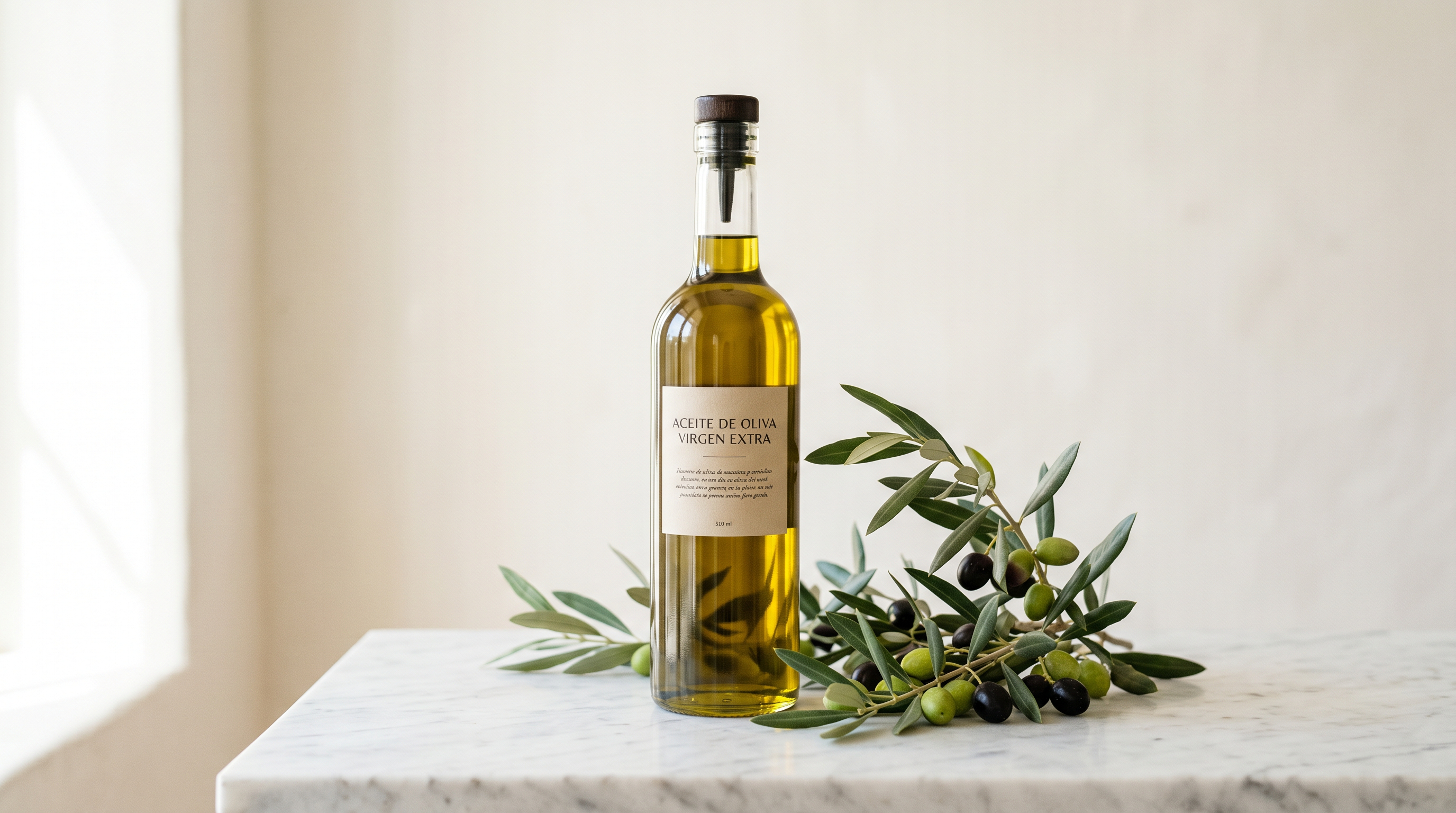
Extra virgin olive oil has been at the heart of longevity research for decades. But what 2026 science confirms goes far beyond the generic advice to "use olive oil instead of butter." A meta-analysis published this year with data from over 90,000 people shows that every additional 10 grams of olive oil per day is associated with a 7% reduction in all-cause mortality risk. The problem is that most urban adults in the UK never reach that threshold. This article explains the biological mechanisms, the real data from the study, and how to adjust your intake without making major changes to your diet.
What sets extra virgin olive oil apart from other oils
Not all olive oils are the same. The "olive oil" label on a supermarket shelf — whether that is Tesco, Sainsbury's, or your local deli — can hide important nutritional differences that determine whether the product you are buying has the profile that research identifies as protective.
Extra virgin olive oil (EVOO) is produced by cold-pressing olives for the first time, with no refining and no blending with other oils. Its composition differs from refined olive oil and vegetable seed oils in three ways with direct health implications:
Polyphenol content. EVOO contains oleocanthal, oleuropein, and other phenolic compounds that are almost entirely lost during refining. The European Food Safety Authority (EFSA, Opinion 2011/2033) has approved the health claim that olive oil polyphenols contribute to the protection of blood lipids from oxidative stress, provided the content is at least 5 mg of hydroxytyrosol and derivatives per 20 g of oil. This claim does not apply to refined olive oil: the processing removes the very compounds that justify it.
Fatty acid composition. Oleic acid makes up between 55% and 83% of EVOO's fat content. This monounsaturated fatty acid reduces LDL cholesterol oxidation, one of the key factors in the development of atherosclerosis. Other vegetable oils such as sunflower or corn oil have very different profiles, dominated by polyunsaturated omega-6 fatty acids that in excess can promote pro-inflammatory processes.
Absence of processing. Refined oils go through deodorisation and bleaching processes that strip away most bioactive compounds. EVOO retains its original nutritional matrix intact, including vitamin E and other antioxidants that act synergistically with polyphenols.
The result is a food that works through several simultaneous mechanisms, not simply as a calorie source or a functionally neutral lipid. And that difference shows up clearly in the epidemiological data.
The three mechanisms behind its health effect
When studies link extra virgin olive oil to lower cardiovascular mortality and greater longevity, it is not a statistical association without a biological explanation. The mechanisms are well understood and backed by peer-reviewed research.
First mechanism: reduction of systemic inflammation. Oleocanthal, one of the polyphenols unique to EVOO, inhibits the COX-1 and COX-2 enzymes, the same targets as commonly used anti-inflammatory drugs such as ibuprofen. The key difference is that it works at much lower concentrations and without the side effects of chronic pharmaceutical treatment. Low-grade chronic inflammation is implicated in most of the non-communicable diseases with the highest prevalence in adults: cardiovascular disease, type 2 diabetes, certain cancers, and accelerated cognitive decline.
Second mechanism: protection of the lipid profile. Oleic acid raises HDL cholesterol levels and reduces LDL oxidation. LDL oxidation is the process that turns cholesterol into an active risk factor: it is oxidised LDL, not total LDL, that deposits in arterial walls and promotes plaque formation. The PREDIMED study, conducted in Spain with over 7,000 participants and published in the New England Journal of Medicine (Estruch et al., 2013), documented a 30% reduction in serious cardiovascular events in people following a Mediterranean diet enriched with extra virgin olive oil, compared to a low-fat control group.
Third mechanism: antioxidant protection of cellular DNA. EVOO polyphenols protect cells from oxidative damage, one of the factors associated with accelerated ageing and increased risk of degenerative diseases. Oleuropein, in particular, has shown in laboratory studies the ability to stabilise cell membranes and reduce DNA damage induced by free radicals. The vitamin E present in the oil acts as a cofactor for this protective effect.
These three mechanisms do not act in isolation but work in a complementary way, which explains why the health effect of EVOO is stronger than that of any of its isolated components. It is not oleic acid alone, nor polyphenols alone: it is the combination of both within a complete food matrix.
The 90,000-person study: what 2026 science actually confirms
The meta-analysis published in 2026 in Annals of Internal Medicine is not an isolated study. It is the result of pooling and analysing data from multiple prospective cohorts that together represent more than 90,000 people followed for an average of twelve years. The main finding is quantifiable: for every additional 10 grams of olive oil consumed per day, all-cause mortality risk decreases by 7% and cardiovascular mortality risk decreases by 10%.
To put that in perspective: 10 grams is just under one tablespoon. A small increase in habitual intake that produces a measurable long-term effect.
What makes this result robust is its consistency across the included studies. Regardless of the geographic origin of the cohorts (Mediterranean or non-Mediterranean), the age range, and the baseline health status of participants, the dose-response relationship holds. No clear ceiling was observed within reasonable consumption ranges: the greater the intake, the greater the observed benefit.
The analysis also broke down results by oil type. The protective associations were specific to virgin and extra virgin olive oil, with smaller or no effects for refined olive oil and seed oils. This points directly to polyphenols as the compounds responsible for the differential benefit, since these are precisely the ones lost during refining.
The researchers also noted a possible synergistic effect: EVOO consumed within a diet rich in vegetables and legumes shows more pronounced effects than the same intake in isolation. It is not just the oil: it is the oil as part of a dietary pattern, which is exactly what the World Health Organization has long pointed to as central to cardiovascular disease prevention.
Satislent PRO includes extra virgin olive oil in every serving
A nutritionally complete meal formulated with the ingredients science supports, including EVOO. From €1.75 per meal.
Discover Satislent PROHow much olive oil do you actually need each day
Mediterranean diet guidelines recommend three to four tablespoons of olive oil per day as the optimal habitual intake, which corresponds to between 30 and 40 grams. The World Health Organization recommends that monounsaturated fats make up between 15% and 20% of total daily energy, and EVOO is the primary source of this type of fat in the European context.
However, real consumption data in urban adult populations shows a significant gap. Dietary intake surveys estimate that adults in urban settings consume an average of between 10 and 18 grams of olive oil per day. The main reason is not price or availability: it is that modern eating patterns, dominated by ready meals, restaurant menus, and packaged foods cooked with seed oils, displace EVOO from the daily diet without people consciously noticing.
Reaching 30 grams per day, the threshold the evidence consistently points to as beneficial, requires incorporating on average:
- One tablespoon when cooking breakfast or your first meal. Eggs, sautéed vegetables, or simply on whole-grain toast. That is roughly 10 to 12 grams in one go.
- One tablespoon as a dressing at lunch. On salad, cooked legumes, or any vegetables. Cold EVOO preserves polyphenols better than heat-cooked oil.
- One tablespoon in the evening meal or as a finishing condiment. A drizzle over pasta, rice, or steamed vegetables completes the daily target without major changes.
This sounds straightforward in principle. The challenge in practice is the routine of someone who grabs something on the go in the morning, picks up a meal deal at lunch, and gets home late to whatever is quickest. That profile, which describes a significant portion of the people who turn to Satislent, has few opportunities to control which oil is used in what they eat.
How to get more EVOO into your diet without overhauling your routine
The solution is not to redesign your entire diet. It is to identify the moments in your day where extra virgin olive oil can enter naturally and make those moments habitual.
Some approaches that work for people with full schedules:
Use EVOO as a cold condiment whenever possible. Raw oil preserves polyphenols better than cooking. A tablespoon over steamed vegetables, cooked pulses, or any ready dish does not alter the flavour aggressively and adds around 10 grams of quality olive oil in seconds.
If you cook at home, save EVOO for low-temperature cooking or for finishing dishes. For high-heat frying, refined olive oil is more appropriate as it handles heat without degrading. EVOO has an acceptable smoke point for gentle sautéing, but loses some polyphenols above 180 degrees Celsius.
Supplement with foods that already include EVOO in their formulation. This is where product design matters: a food that includes extra virgin olive oil as a base ingredient gives you that fraction of EVOO consistently, without depending on whether you had time to cook at home that day. The goal is to build a baseline of habitual consumption that works even on days when you do not control what you eat.
If you want to understand how EVOO fits into a complete nutrition approach, you can also explore the role of gofio canario as a Mediterranean base ingredient or review the 26 essential micronutrients a complete meal should cover.
Why Satislent PRO includes extra virgin olive oil in its formula
The inclusion of extra virgin olive oil in Satislent PRO's formula is not a marketing trend decision. It is a formulation choice based on exactly the type of evidence reviewed in this article: science with consolidated peer-reviewed backing, known biological mechanisms, and long-range epidemiological data.
EVOO contributes in each serving of Satislent PRO a source of oleic acid and natural polyphenols integrated within a complete food matrix that also includes whole oats, pea protein, flaxseeds, and gofio canario. The combination is not random: each ingredient is selected for its nutritional profile and compatibility with the rest, following the same principle that Mediterranean diet research identifies as most effective, which is the synergy between nutrients within a real-food dietary pattern.
You can compare Satislent PRO's ingredient composition with other complete meal options on the market in the article Huel vs. Satislent: which is better for you, where we specifically analyse ingredient and formulation differences between the main options available.
Each serving of Satislent PRO is designed to work as a nutritionally complete meal. And that includes the lipid fraction that science identifies as protective: not any fat, but extra virgin olive oil as the primary source.
Frequently asked questions
How many tablespoons of olive oil per day are recommended?
Mediterranean diet guidelines recommend between 3 and 4 tablespoons per day (30-40 grams) as the optimal habitual intake. The 2026 meta-analysis shows a measurable benefit from 10 additional grams per day above your current intake, with a dose-response relationship and no clear ceiling within reasonable ranges. If your current intake is around 10-15 grams, adding one tablespoon daily already has a quantifiable effect according to available evidence.
What is the difference between olive oil and extra virgin olive oil?
Extra virgin olive oil is the first cold-press extraction, unrefined. It retains polyphenols, particularly oleocanthal and oleuropein, which are responsible for the anti-inflammatory and antioxidant effect documented in studies. Conventional or refined olive oil loses these compounds during processing and has a significantly different nutritional profile, with little or no protective effect on lipids and inflammatory markers.
Does olive oil cause weight gain if you use it daily?
Olive oil is calorie-dense at 9 kcal per gram, as with any fat. However, long-term studies on Mediterranean diets, which involve habitual and relatively high EVOO intake, do not show greater weight gain than low-fat diets. The effects on satiety, blood sugar regulation, and metabolic profile of oleic acid differentiate its real impact from that of other fat sources. Three tablespoons a day contribute around 360 additional kcal, which should be considered in the context of your total diet.
Can olive oil prevent cardiovascular disease?
Epidemiological and intervention studies, including the PREDIMED trial with over 7,000 participants, associate habitual EVOO consumption with a significant reduction in cardiovascular risk. It is not a medical treatment and does not replace the guidance of a healthcare professional, but extra virgin olive oil is one of the foods with the greatest accumulated scientific evidence for heart protection within the context of a balanced diet.
Does olive oil lose its properties when heated?
Above 180 degrees Celsius, EVOO loses some of its polyphenols. Oleic acid is more heat-resistant. For high-temperature cooking, refined olive oil is preferable as it handles the heat without degrading. For cold dressings or low-to-medium temperature cooking, EVOO preserves its full nutritional profile and is the option that research identifies as most beneficial.
Conclusion
Research on extra virgin olive oil has moved from generic associations with "the Mediterranean diet is healthy" to quantifying effects with precision: 7% less all-cause mortality risk per additional 10 grams per day, with well-identified biological mechanisms replicated across cohorts from different countries and health profiles.
Three takeaways: the difference between EVOO and refined olive oil is not one of degree but of compound type, and that difference determines whether the oil you consume has or does not have the effect the evidence describes. The benefit threshold starts at 10 additional grams above your current intake — a single tablespoon that is entirely achievable. And the most consistent way to reach that threshold is to make EVOO part of the foods you already consume daily, not of occasional special recipes.
If you want to explore how to build a diet that naturally includes the ingredients science supports, the next step is to try Satislent PRO.
Want to try Satislent PRO before committing?
Tasting Pack: 6 complete meals in all flavours, from €23, with a free shaker on your first order and no subscription required.
Try the Tasting PackThis article is for informational purposes only. It does not replace advice from a healthcare professional. If you have specific health conditions, consult your doctor or nutritionist.
Updated: May 2026 | Satislent Editorial Team